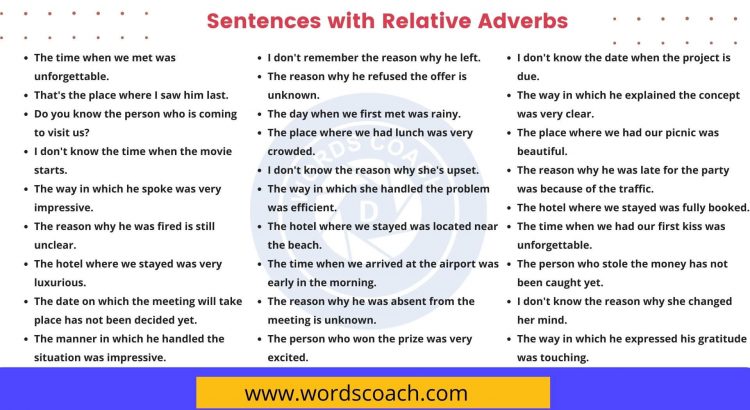
Here are 100+ sentences with Relative Adverbs:

100+ Sentences with Adverbs of Degree in English
Here are 100+ sentences with Adverbs of Degree:

100+ Sentences with Adverbs of Frequency in English
Here are 100+ sentences with Adverbs of Frequency:

100+ Sentences with Interrogative Adverbs in English
Here are 100+ sentences with Interrogative Adverbs: Explore how to use interrogative adverbs in English with clear example sentences. Learn how these adverbs form questions about time, place, manner, and reason, enhancing your grammar skills.

100+ Sentences with Adverbs of Manner in English
100+ Sentences with Adverbs of Manner in English Learn how to use adverbs of manner in English with example sentences. Understand how these adverbs describe the way actions are performed and enhance your grammar skills.

100+ Sentences with Adverb of Attitude in English
Discover 100+ sentences with adverbs of attitude in English. Learn how to express emotions, opinions, and viewpoints through adverbs of attitude with clear examples and grammar tips.

100+ Sentences with Adverbs of Affirmation in English
Explore 100+ sentences with adverbs of affirmation in English. Learn how to use these adverbs to express certainty and confidence, along with detailed examples to enhance your grammar skills.
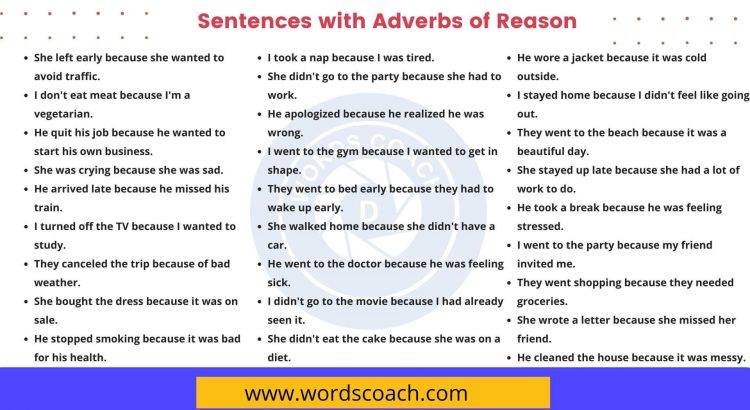
100+ Sentences with Adverb of Reason in English
100+ Sentences with Adverb of Reason in English. Learn how to use adverbs of reason in English with clear definitions and example sentences. Understand how these adverbs explain why actions happen and improve your grammar skills.
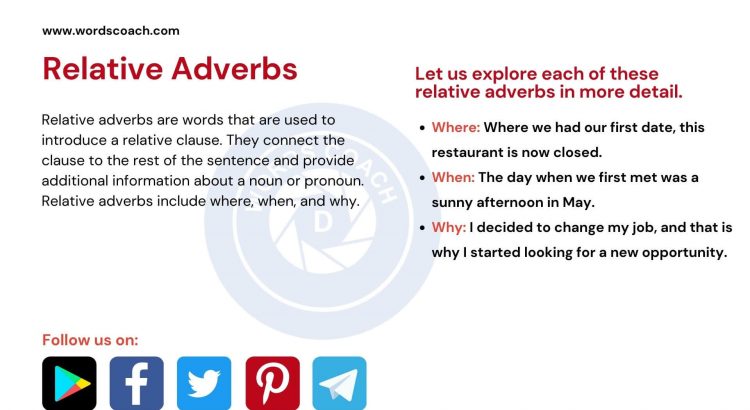
Relative Adverbs
Relative adverbs are an important part of the English language. They are words that are used to introduce a relative clause, which is a dependent clause that provides additional information about a noun or pronoun. Relative adverbs are used to connect the clause to the rest of the sentence and provide context and detail.
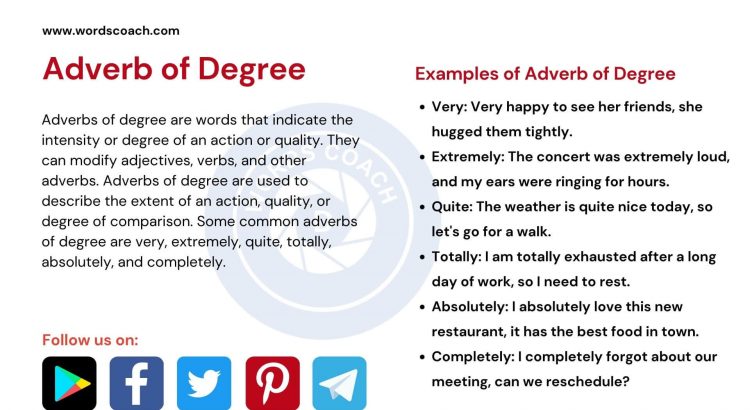
Adverb of Degree
Adverb of degree are words that indicate the intensity or degree of an action or quality. They can modify adjectives, verbs, and other adverbs. Adverbs of degree are used to describe the extent of an action, quality, or degree of comparison. Some common adverbs of degree are very, extremely, quite, totally, absolutely, and completely.
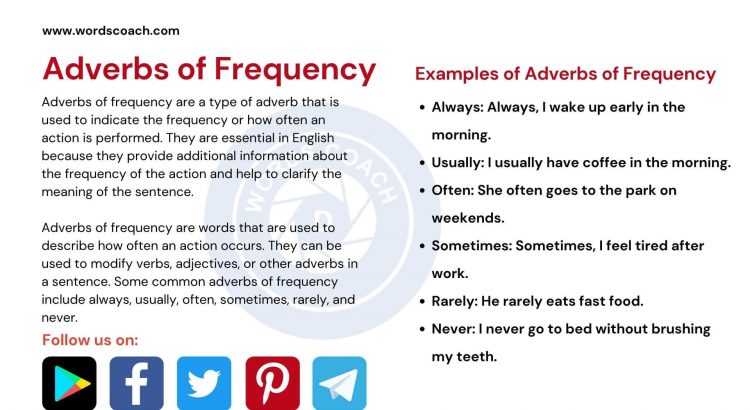
Adverbs of Frequency
Adverbs of frequency are words that are used to describe how often an action occurs. They can be used to modify verbs, adjectives, or other adverbs in a sentence. Some common adverbs of frequency include always, usually, often, sometimes, rarely, and never. Let us explore each of these adverbs in more detail.
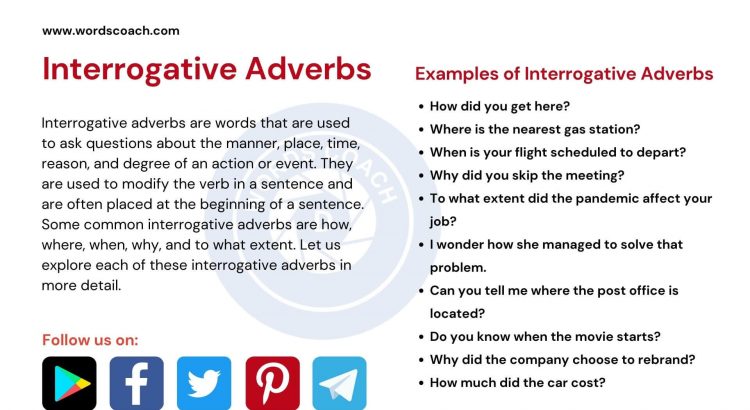
Interrogative Adverbs
Interrogative adverbs are words that are used to ask questions about the manner, place, time, reason, and degree of an action or event. They are used to modify the verb in a sentence and are often placed at the beginning of a sentence. Some common interrogative adverbs are how, where, when, why, and to what extent.
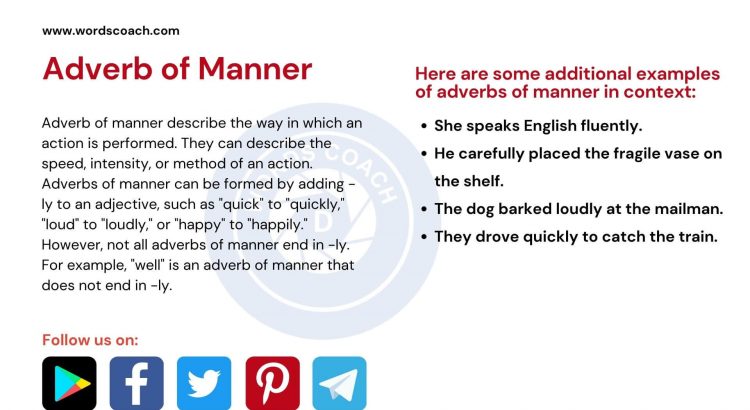
Adverb of Manner
Adverb of manner describe the way in which an action is performed. They can describe the speed, intensity, or method of an action. Adverbs of manner can be formed by adding -ly to an adjective, such as “quick” to “quickly,” “loud” to “loudly,” or “happy” to “happily.”
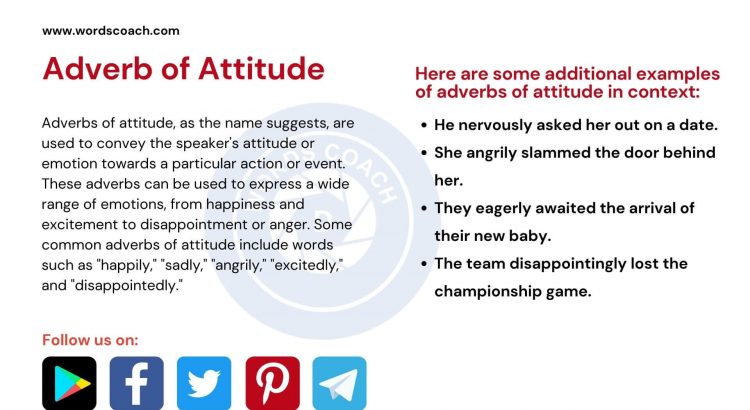
Adverb of Attitude
Adverb of attitude, as the name suggests, are used to convey the speaker’s attitude or emotion towards a particular action or event. These adverbs can be used to express a wide range of emotions, from happiness and excitement to disappointment or anger. Some common adverbs of attitude include words such as “happily,” “sadly,” “angrily,” “excitedly,” and “disappointedly.”

Adverbs of Affirmation
Learn how adverbs of affirmation (certainly, definitely, truly) add confidence to sentences. Master their usage with clear examples, common mistakes, and grammar tips. Perfect for students and writers!
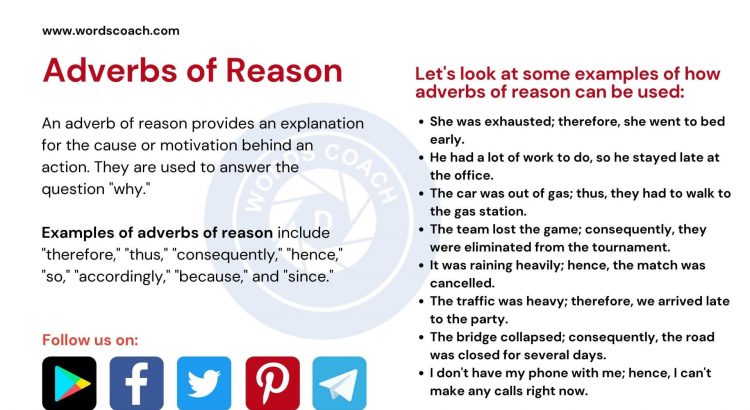
Adverbs of Reason, 25+ Sentences of Adverb of Reason
An adverb of reason provides an explanation for the cause or motivation behind an action. They are used to answer the question “why.” Examples of adverbs of reason include “therefore,” “thus,” “consequently,” “hence,” “so,” “accordingly,” “because,” and “since.”

100+ Sentences with Adverbs of Place in English
Here are 100+ sentences with adverbs of place:
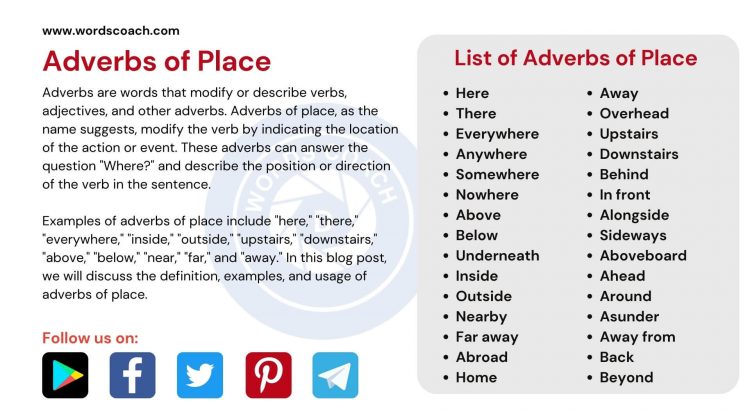
Adverbs of Place, 10 Examples of Adverbs of Place
Adverbs of place are words that describe the location or direction of an action or event. These adverbs can be used to indicate where something is happening, where someone is going, or where something is located.

100+ Sentences with Adverbs of Time in English
Here are 110 example sentences with Adverbs of Time in English:
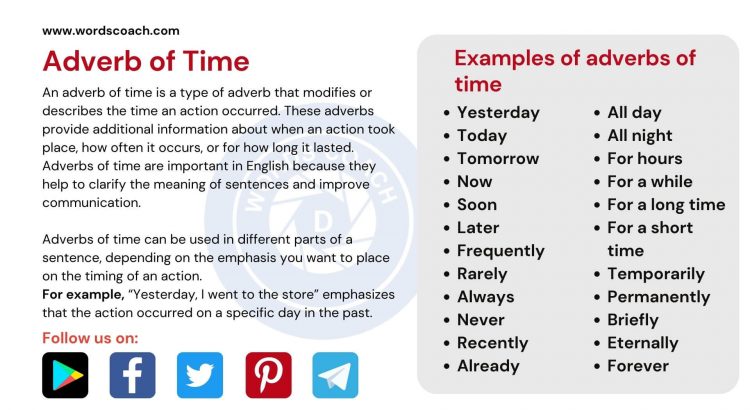
Adverb of Time, 20 Examples of Adverbs of Time
An adverb of time is a type of adverb that modifies or describes the time an action occurred. These adverbs provide additional information about when an action took place, how often it occurs, or for how long it lasted. Adverbs of time are important in English because they help to clarify the meaning of sentences and improve communication.
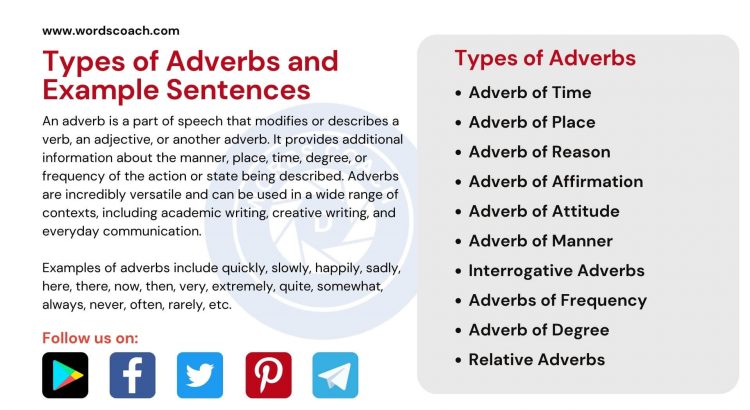
10 Types of Adverbs and Example Sentences
Types of Adverbs and Example Sentences
An adverb is a part of speech that modifies or describes a verb, an adjective, or another adverb. It provides additional information about the manner, place, time, degree, or frequency of the action or state being described. Adverbs are incredibly versatile and can be used in a wide range of contexts, including academic writing, creative writing, and everyday communication.
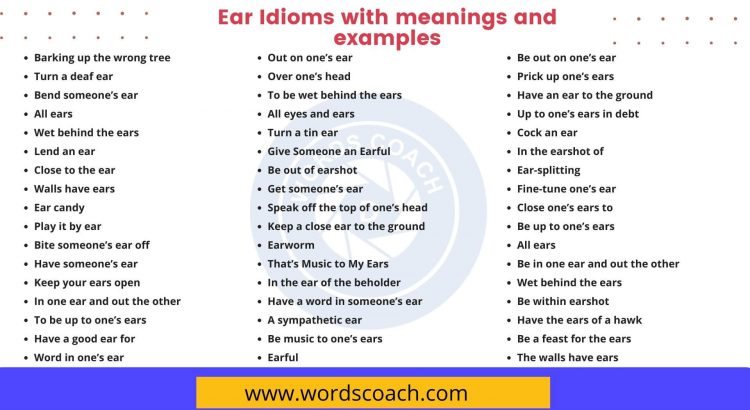
50+ Ear Idioms with meanings and examples
50+ Ear Idioms with meanings and examples
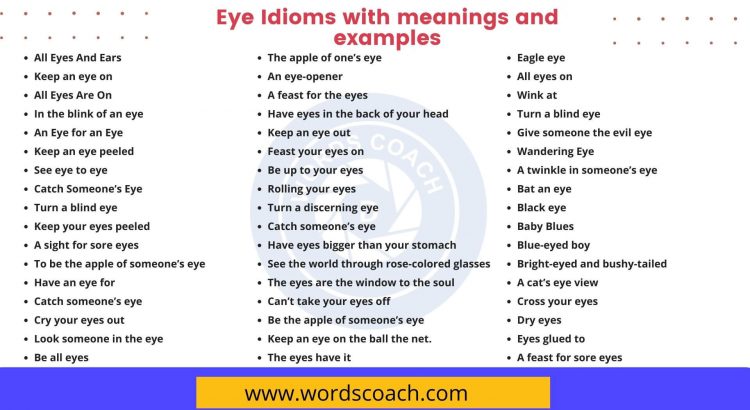
50+ Eye Idioms with meanings and examples
Here are 50+ Eye Idioms with meanings and examples:
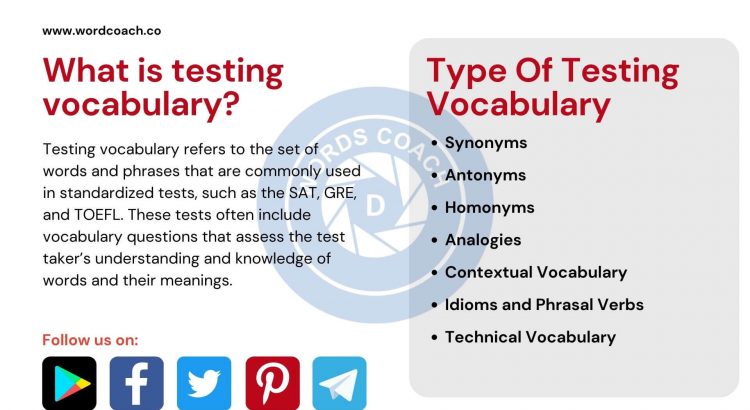
What is testing vocabulary?
Testing vocabulary refers to the set of words and phrases that are commonly used in standardized tests, such as the SAT, GRE, and TOEFL. These tests often include vocabulary questions that assess the test taker’s understanding and knowledge of words and their meanings
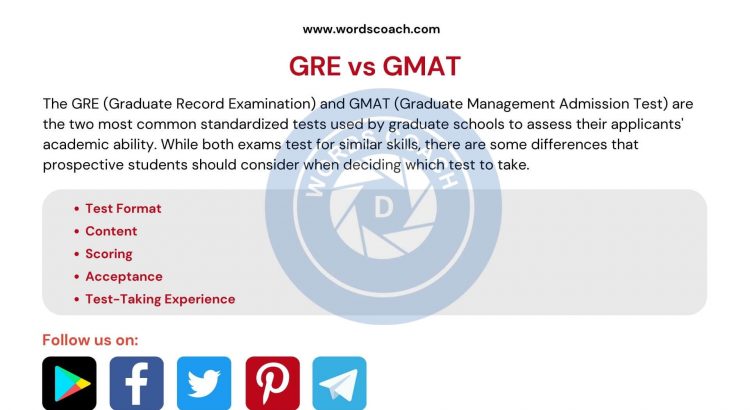
GRE vs GMAT: What’s the Difference? Which to Take?
GRE vs GMAT: For students who want to pursue a graduate degree in business, the GRE (Graduate Record Examination) and GMAT (Graduate Management Admission Test) are the two most common standardized tests used by graduate schools to assess their applicants’ academic ability. While both exams test for similar skills, there are some differences that prospective students should consider when deciding which test to take.