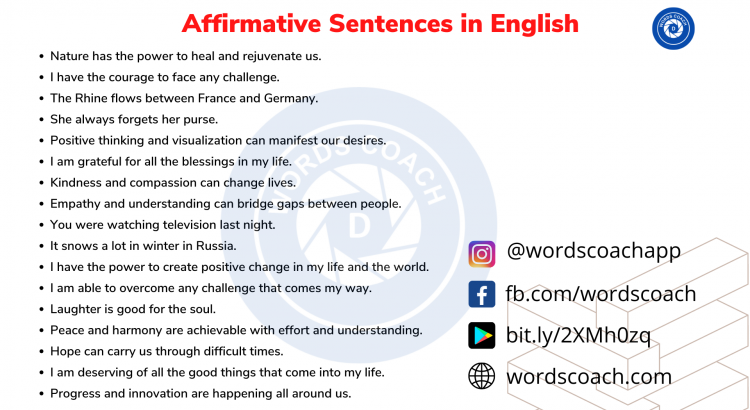
100+ Affirmative Sentences in English
Category: Sentences
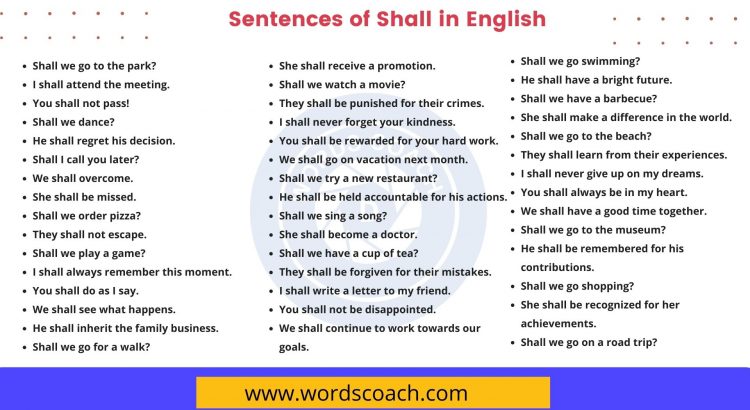
100 Sentences of Shall in English
“shall” is a versatile verb that is used to express a range of meanings and functions, and its precise meaning depends on the context in which it is used.
100+ Sentences of Shall in English
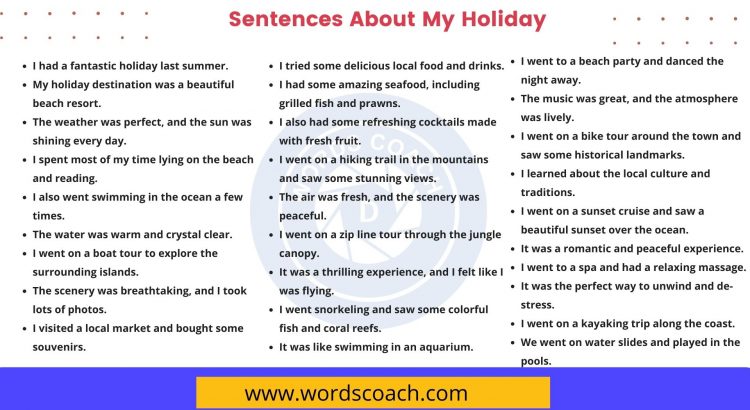
100+ Sentences About My Holiday in English
Here are list of 100+ Sentences About My Holiday in English.
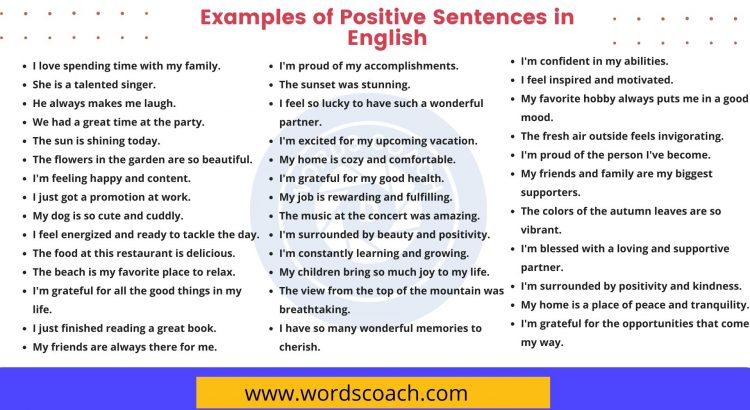
100+ Examples of Positive Sentences in English
List of 100+ Examples of Positive Sentences in English
Positive sentences (Examples of positive sentences) are those which do not have any negative words like – not, never, etc.
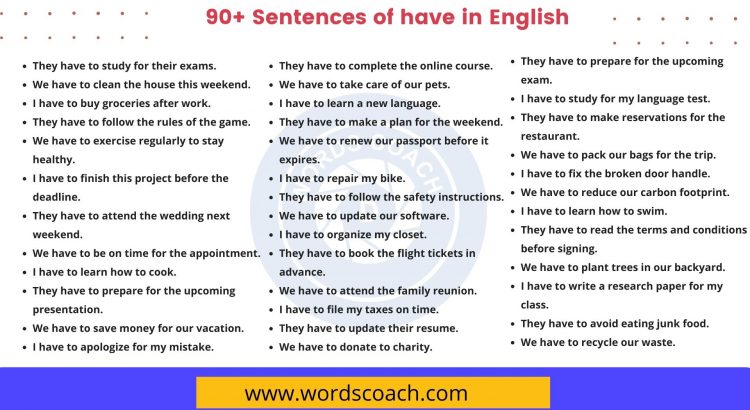
90+ Sentences of have in English
The verb “have” has multiple meanings and uses in English, including:
The exact meaning of “have” depends on the context and the verb tense used.
Sentences of have in English
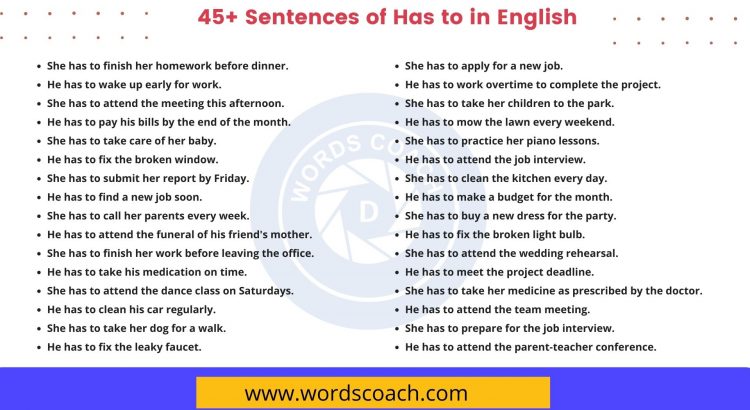
60+ Sentences of Has to in English
Sentences of Has to in English
If you are learning English or trying to improve your fluency, it’s important to understand the various ways in which the verb “have” can be used. One common form is the phrase “has to,” which is used to indicate that someone or something is required to do something.
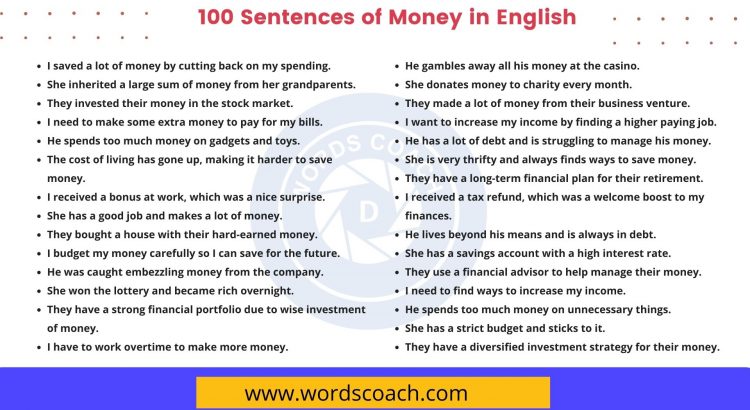
100 Sentences of Money in English
100 Sentences of Money in English
The importance of money in our daily lives cannot be overstated. Money is a medium of exchange that has greatly facilitated trade and commerce throughout history. A comprehensive understanding of money, its uses, and its evolution can be useful in managing one’s own finances and making informed decisions about spending, saving, and investing. Whether it’s setting financial goals, creating a budget, or investing in a retirement plan, the use of money is a fundamental part of our lives and is essential to achieving financial security and independence.
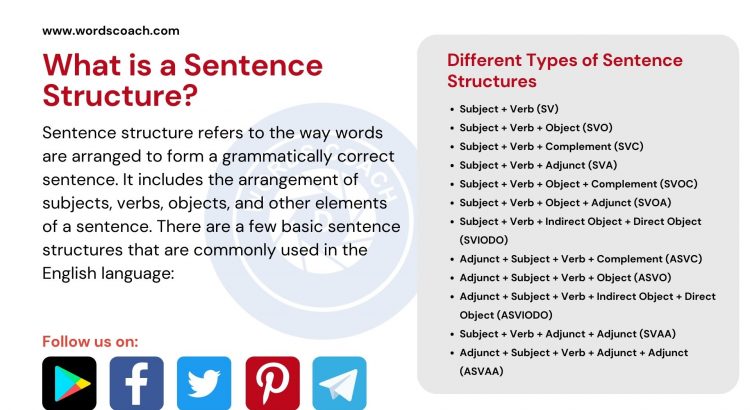
Sentence Structure
Sentence structure refers to the way words are arranged to form a grammatically correct sentence. It includes the arrangement of subjects, verbs, objects, and other elements of a sentence. There are a few basic sentence structures that are commonly used in the English language:
Examples of Sentence Structure
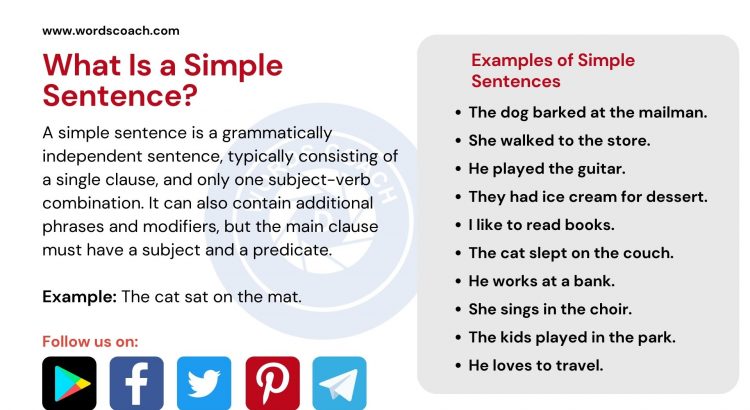
Simple Sentences
A simple sentence is a grammatically independent sentence, typically consisting of a single clause, and only one subject-verb combination. It can also contain additional phrases and modifiers, but the main clause must have a subject and a predicate.
Examples of Simple Sentences:-
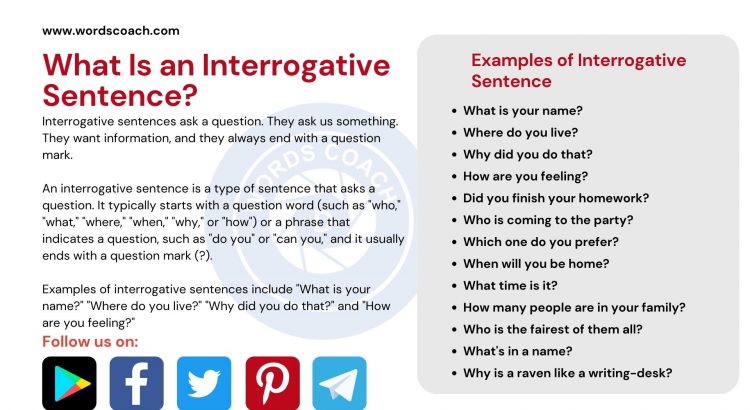
Interrogative Sentences
Interrogative sentences ask a question. They ask us something. They want information, and they always end with a question mark.
The usual word order for the interrogative sentence is:
(wh-word +) auxiliary + subject + verb…
Types of Interrogative Sentences
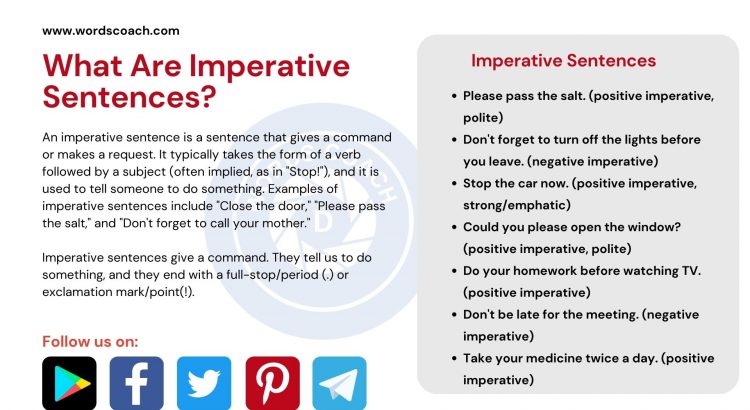
Imperative Sentences
Imperative sentences give a command. They tell us to do something, and they end with a full-stop/period (.) or exclamation mark/point(!).
The usual word order for the imperative sentence is:

Exclamatory Sentences
Exclamative sentences (Exclamatory Sentences) express strong emotion/surprise an exclamation and they always end with an exclamation mark/point (!).
What Is an Exclamatory Sentence?
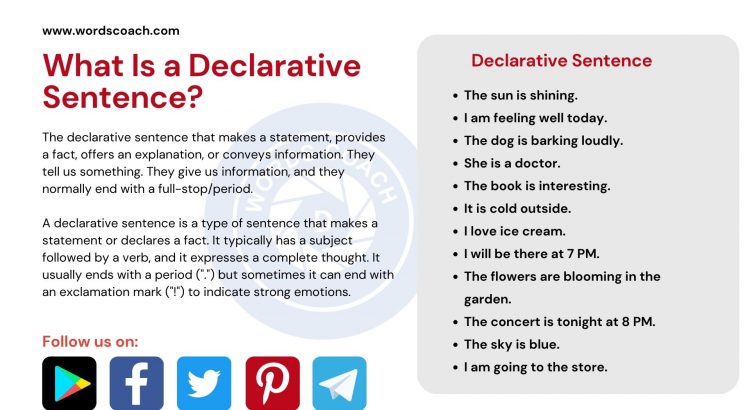
Declarative Sentences
The declarative sentence that makes a statement, provides a fact, offers an explanation, or conveys information. They tell us something. They give us information, and they normally end with a full-stop/period.
Types of Declarative Sentences
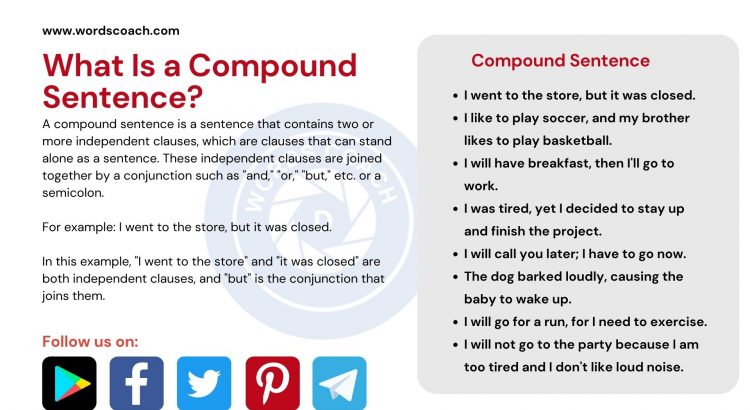
Compound Sentences
A compound sentence is one that has two or more independent clauses connected by a coordinating conjunction.
What Is a Compound Sentence?
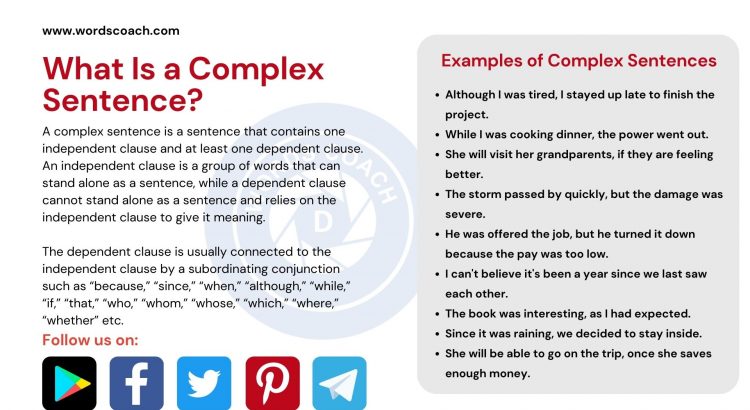
Complex Sentences
A complex sentence is a sentence that contains one independent clause and at least one dependent clause. An independent clause is a group of words that can stand alone as a sentence, while a dependent clause cannot stand alone as a sentence and relies on the independent clause to give it meaning.
Examples of Complex Sentences
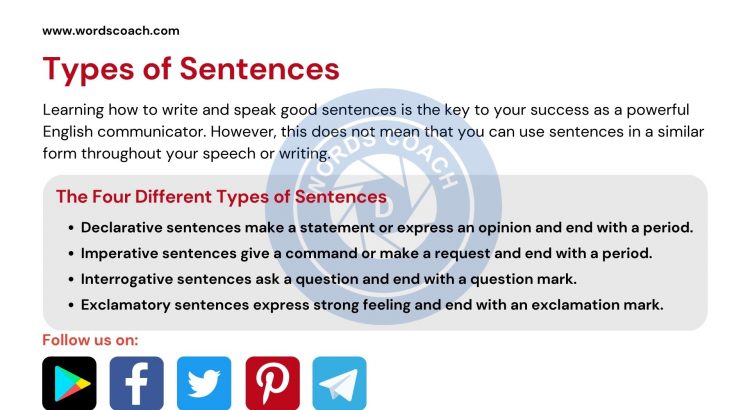
Types of Sentences
Learning how to write and speak good sentences is the key to your success as a powerful English communicator. However, this does not mean that you can use sentences in a similar form throughout your speech or writing.
The Four Different Types of Sentences

50+ Sentences with HAS
We use ‘has’ to show possession or ownership of singular objects. Has is used with he, she, and it.
50+ Sentences with HAS
200+ Examples Degrees Of Comparison List
Examples Degrees Of Comparison:
Degrees of Comparison are used when we compare a person or thing with another. Degrees of Comparison are applicable only to Adverbs and Adjectives.
Degrees of Comparison add variations to the sentences. A most familiar example of degrees i.e. good < better < best. The degree is increasing from good to best. 200+ Examples Degrees Of Comparison List
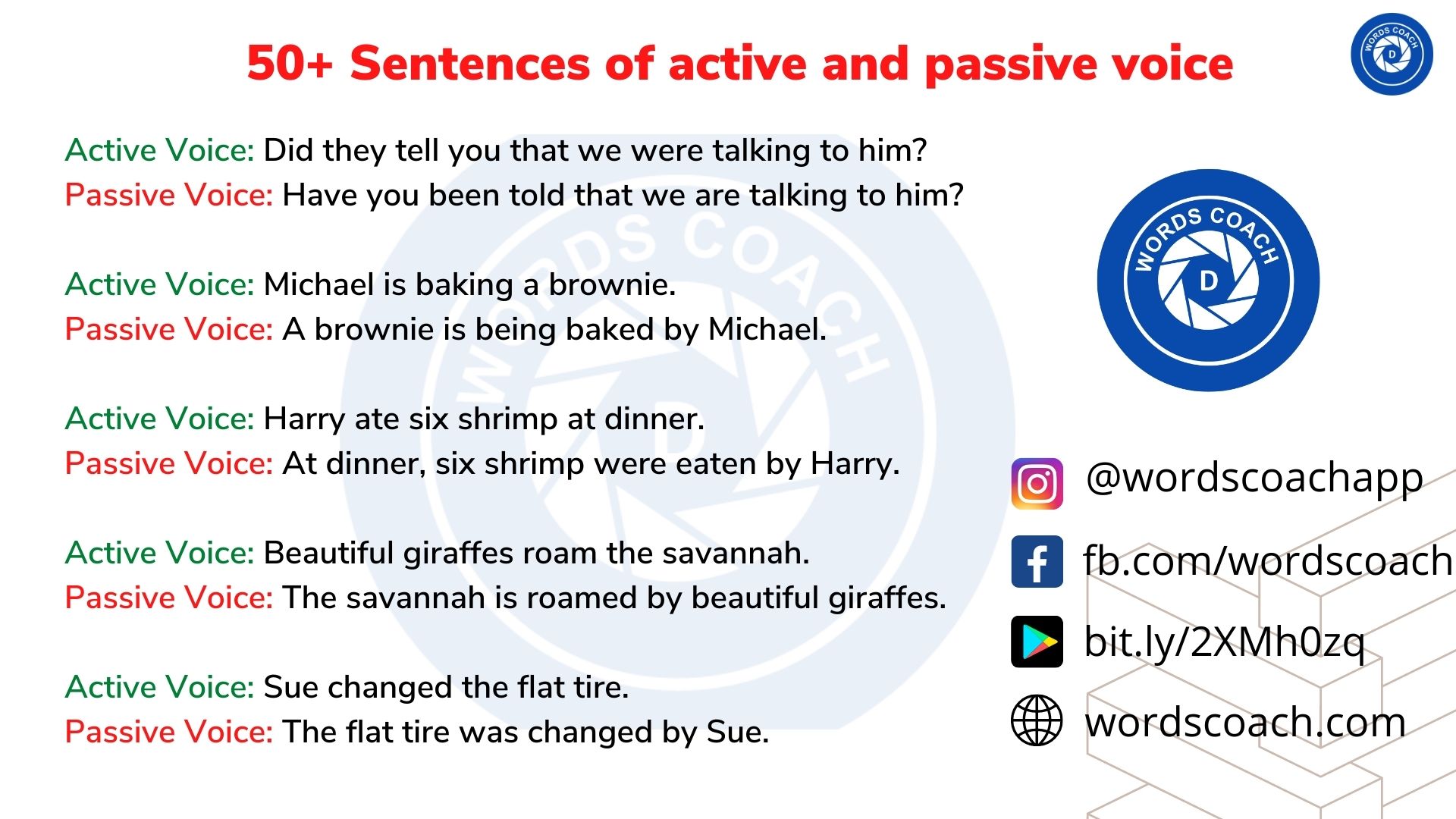
50+ Sentences of active and passive voice
50+ Sentences of active and passive voice
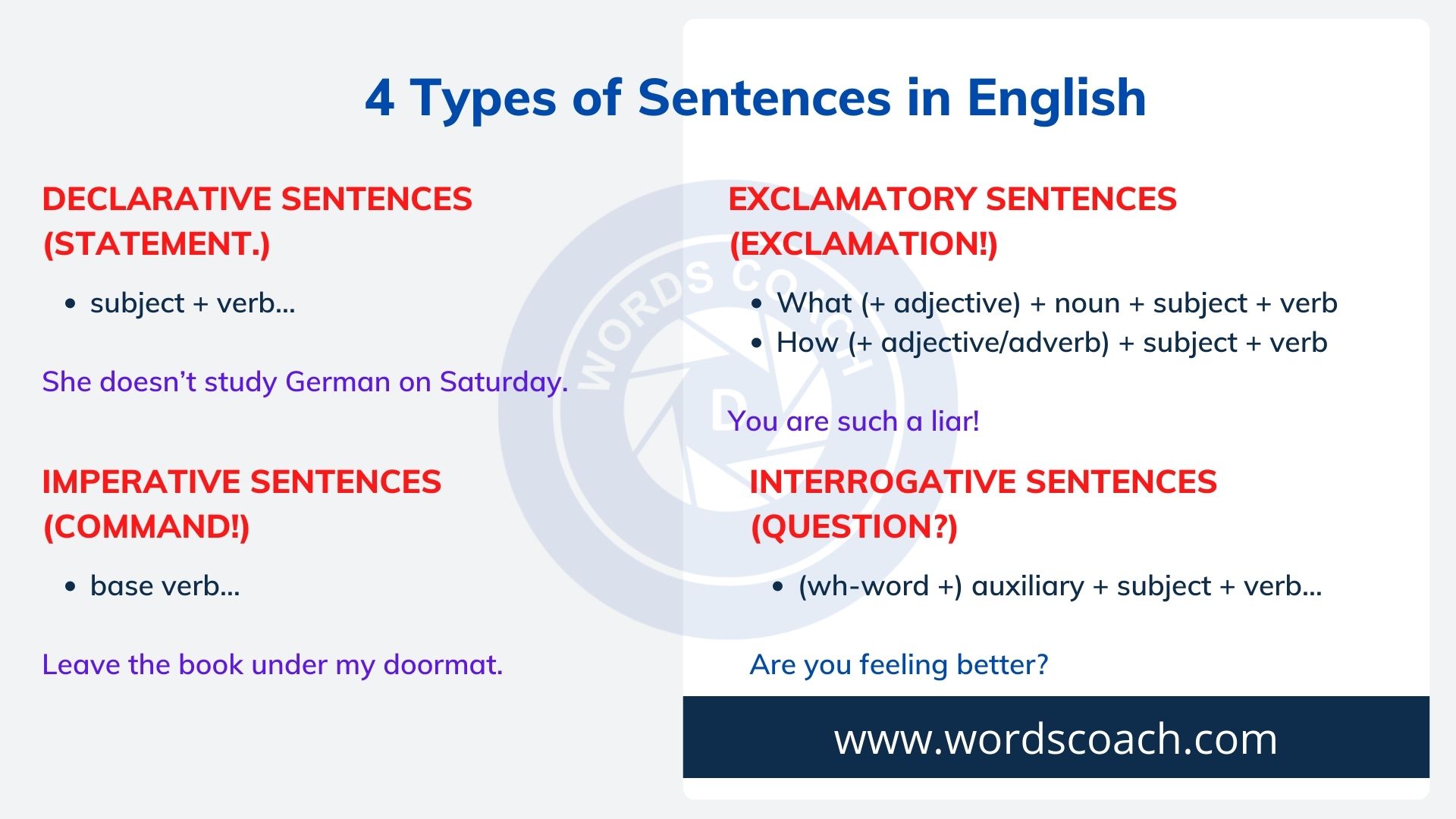
4 Types of Sentences in English
Types of Sentences in English. There are four types of English sentence, classified by their purpose:
1. Declarative Sentences (statement.)
2. Exclamatory Sentences (exclamation!)
3. Imperative Sentences (command!)
4. Interrogative Sentences (question?)
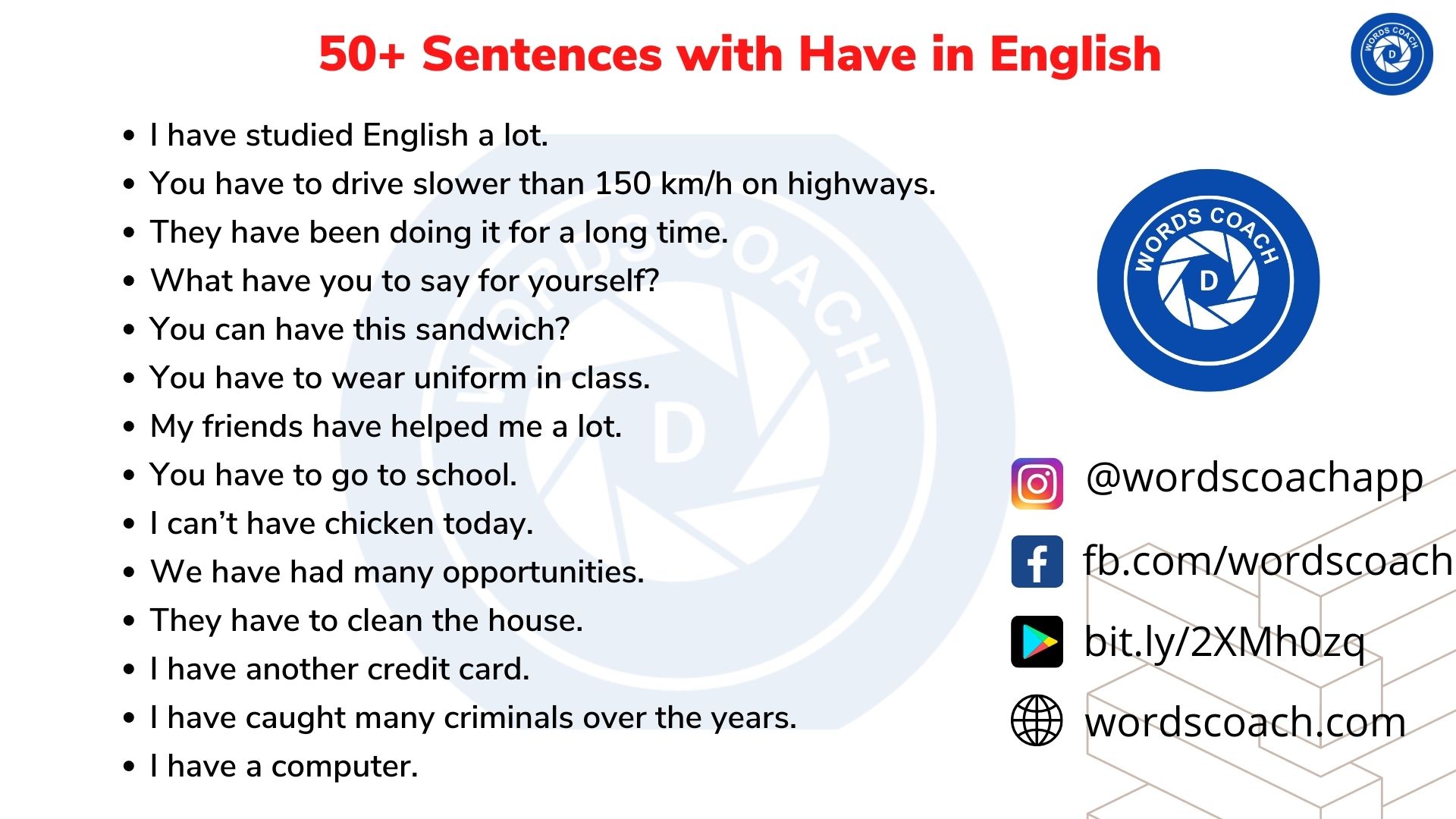
50+ Sentences with Have in English
Sentences with have, Sentences with have in English and make the sentence, Sentences with have in English and Spanish, Sentences with have in English British council
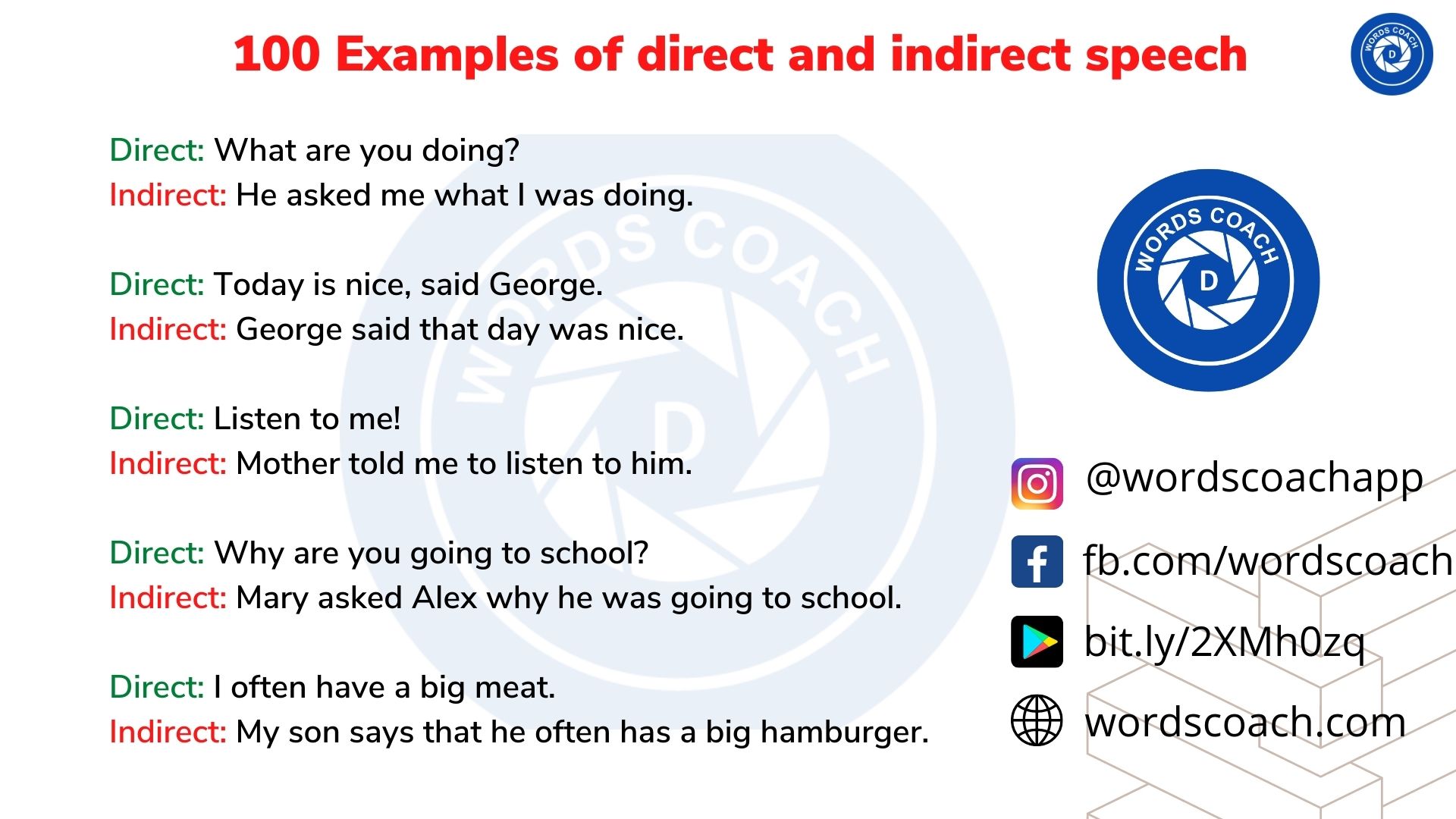
100 Examples of direct and indirect speech
100 examples of assertive sentences in direct and indirect speech, 30 examples of direct and indirect speech assertive sentences, 50 examples of direct and indirect speech exclamatory sentences
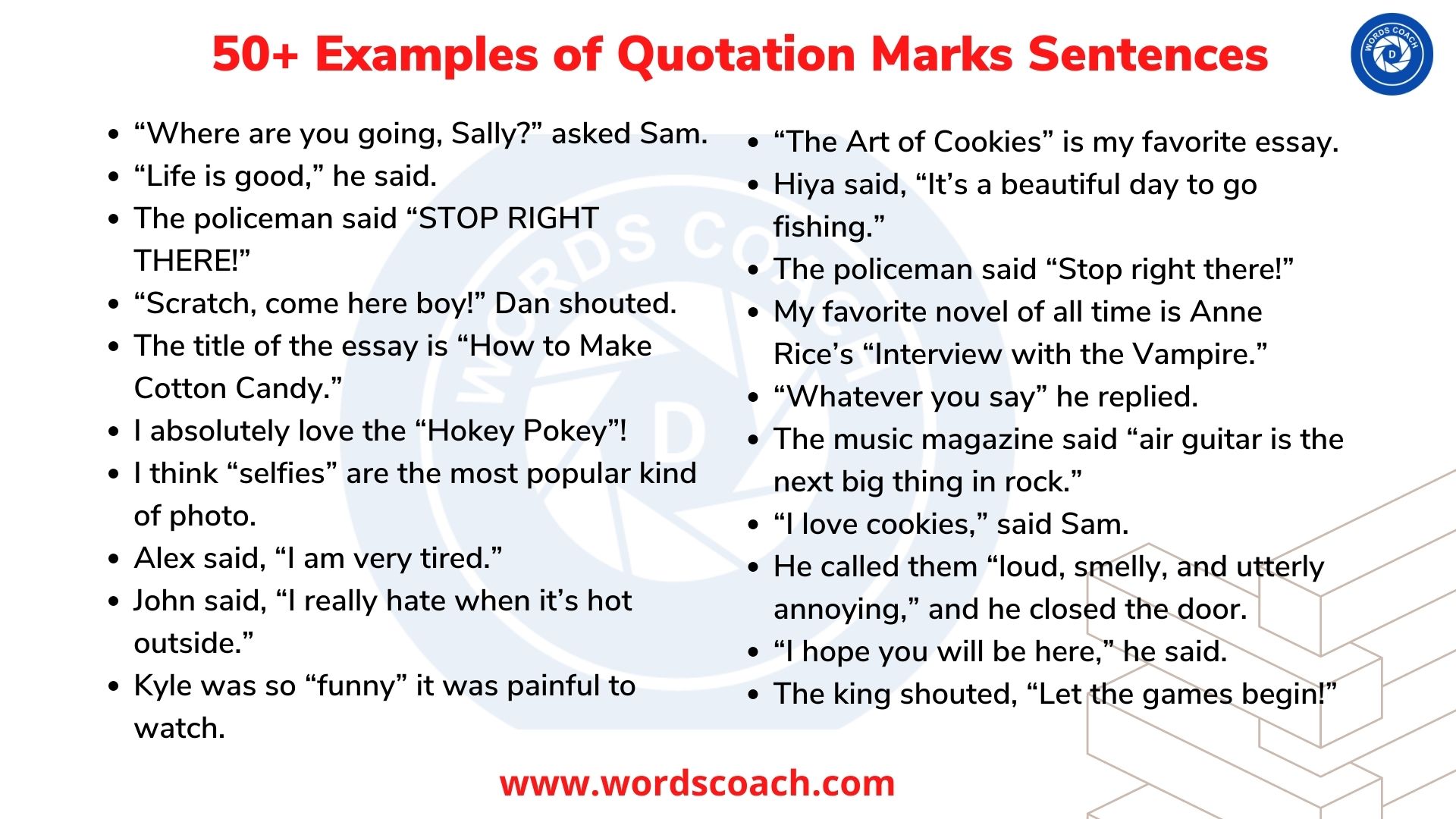
50+ Examples of Quotation Marks Sentences
Quotation marks are punctuation marks used in pairs in various writing systems to set off direct speech, a quotation, or a phrase.
50+ Examples of Quotation Marks Sentences
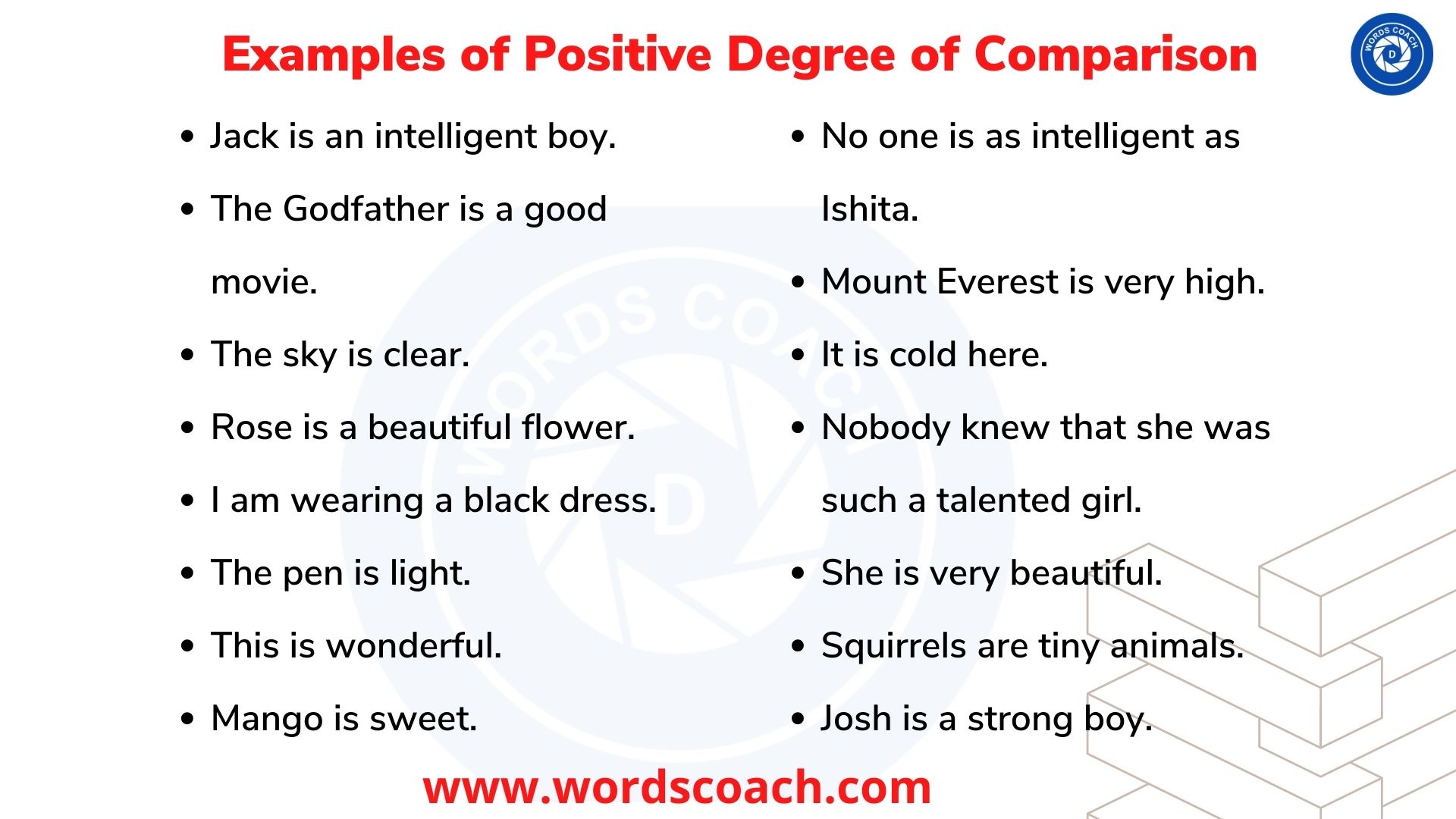
What is the Positive Degree of Comparison?
A “Positive Degree of Comparison” is used when we are talking about only one person or thing. An adjective or adverb that does not make a comparison is said to be in a positive degree. It is just used to state the quality possessed by a particular noun or pronoun that acts as the subject in a sentence.